No products in the cart.


Tesamorelin is a synthetic peptide that acts as an analog of growth hormone releasing hormone (GHRH). It is designed to stimulate the pituitary gland to increase the body’s natural production of human growth hormone (HGH). Unlike direct HGH therapy, Tesamorelin works by enhancing the body’s own hormonal signaling rather than replacing it.
Tesamorelin is one of the more clinically studied peptides and occupies a unique position at the intersection of medical treatment and metabolic health.
How Tesamorelin Works
Tesamorelin binds to GHRH receptors in the pituitary gland, triggering a pulsatile release of growth hormone. This leads to downstream increases in insulin-like growth factor-1 (IGF-1), which mediates many of growth hormone’s metabolic and tissue-level effects.
Key actions include:
Stimulating endogenous HGH release
Promoting fat metabolism, particularly visceral fat
Supporting muscle preservation and tissue repair
Because it follows the body’s natural hormonal pathways, Tesamorelin maintains normal feedback mechanisms.
Medical and Clinical Uses
Tesamorelin is FDA-approved for the treatment of HIV-associated lipodystrophy, specifically to reduce excess visceral abdominal fat in affected patients.
Outside of this approved use, it is sometimes prescribed off-label for:
Visceral fat reduction
Metabolic health support
Growth hormone deficiency–related symptoms (under medical supervision)
Potential Benefits
Based on clinical data and reported use, Tesamorelin may provide:
Reduction in visceral (deep abdominal) fat
Improved body composition
Preservation of lean muscle mass
Support for metabolic markers
Enhanced recovery and overall vitality
Its effects are generally more metabolic than cosmetic and tend to develop gradually over weeks to months.
Administration
Administered as a daily subcutaneous injection
Often taken in the evening to align with natural HGH release cycles
Typically used continuously during treatment rather than in short cycles
Dosing and duration depend on the clinical indication and patient response.
Tesamorelin Structure
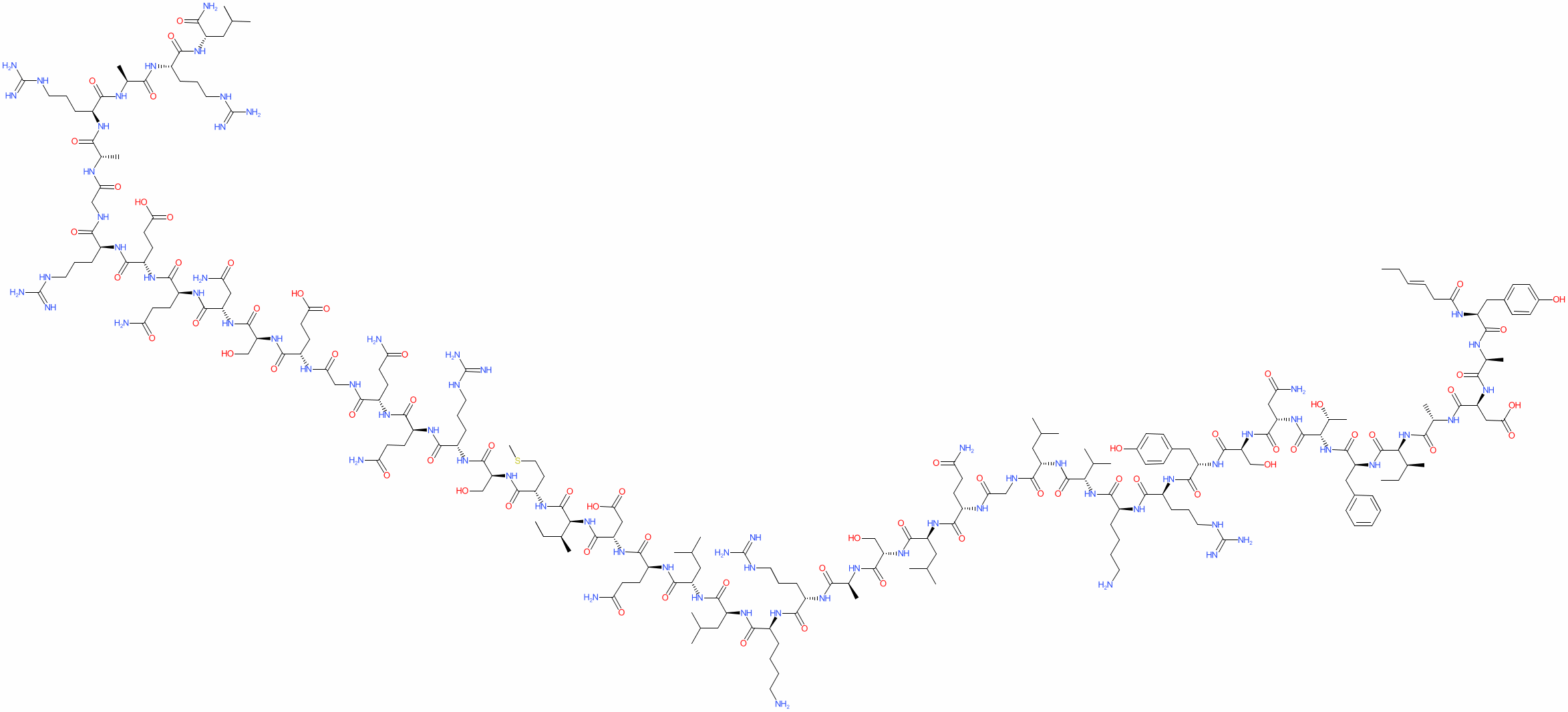 Sequence (Single Letter): Unk-Tyr-Ala-Asp-Ala-Ile-Phe-Thr-Asn-Ser-Tyr-Arg-Lys-Val-Leu-Gly-Gln-Leu-Ser-Ala-Arg-Lys-Leu-Leu-Gln-Asp-Ile-Met-Ser-Arg-Gln-Gln-Gly-Glu-Ser-Asn-Gln-Glu-Arg-Gly-Ala-Arg-Ala-Arg-Leu
Molecular Formula: C223H370N72O69S
Molecular Weight: 5195.908 g/mol
PubChem CID: 44147413
CAS Number: 901758-09-6
Tesamorelin Research
As a GHRH analogue, tesamorelin is used in laboratory research to probe GHRHR activation and downstream signaling associated with GH/IGF-axis regulation. In experimental contexts, GHRHR engagement is commonly associated with GPCR-mediated signaling (often Gs/cAMP-linked), modulation of kinase activity, and transcriptional programs that influence endocrine signaling dynamics. The trans-3-hexanoic acid modification is used in peptide engineering to support reproducible exposure profiles in controlled research workflows and to facilitate mechanistic interrogation of receptor signaling and feedback regulation.
1. Experimental Modeling of Visceral Adiposity & Lipid Biomarkers
Published studies have evaluated tesamorelin and related growth hormone–releasing factor analogues in research cohorts using metabolic endpoints and biomarker readouts. Reported analyses include associations between changes in visceral adipose tissue measures and lipid parameters such as triglycerides. These citations are provided strictly for scientific background and do not imply any intended medical, diagnostic, or therapeutic use.
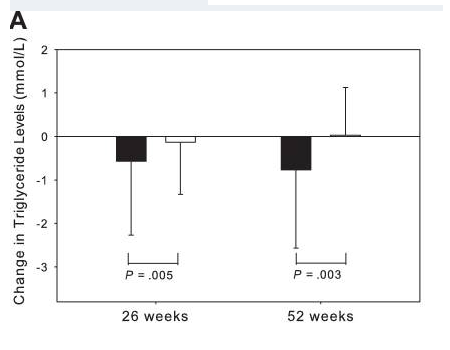 Figure included as an educational reference to the cited publication record.
Source: PubMed
2. Endocrine Axis Research in Chronic Infection Models
Reviews and mechanistic discussions have described endocrine and metabolic alterations observed in chronic infection research settings, including reported changes in growth hormone axis parameters. In RUO laboratories, tesamorelin may be used as a receptor-directed probe to evaluate signaling relationships and endocrine feedback behavior under controlled experimental conditions.
3. Peripheral Nerve Biology & Growth Hormone Axis Augmentation (Preclinical Context)
The growth hormone axis has been discussed in preclinical literature as a modulator of cellular environments relevant to peripheral nerve injury models and regenerative biology research. Reviews have summarized potential mechanistic links between endocrine signaling and experimental outcomes in nerve repair paradigms . These discussions support hypothesis generation for mechanistic studies (e.g., growth factor signaling, Schwann cell-associated pathways, and axonal outgrowth processes) in non-clinical settings.
4. Neuroendocrine Signaling & Biomarker Readouts in Cognitive Research
GHRH analogues have been evaluated in published research using biomarker and neurochemical readouts, including spectroscopy-associated measures and neurotransmitter-related endpoints, as part of broader investigations into neuroendocrine signaling in aging models. References are provided for pathway context only.
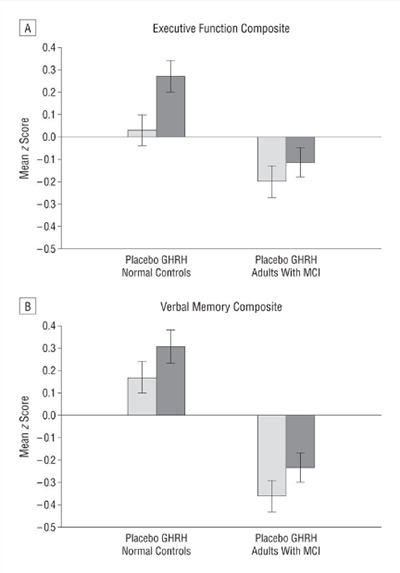 Figure included as an educational reference to the cited publication record.
Source: PubMed
Be the first to review “Tesamorelin 2mg (10 Vial Kit)”
Related products

Popular Peptides
$55.00

Peptide Capsules
$195.00

Popular Peptides
$55.00

Popular Peptides
$80.00 – $160.00

Popular Peptides
$95.00

Popular Peptides
$49.00

Cosmetic Peptides
$189.00

Popular Peptides
$65.00
Reviews
There are no reviews yet.